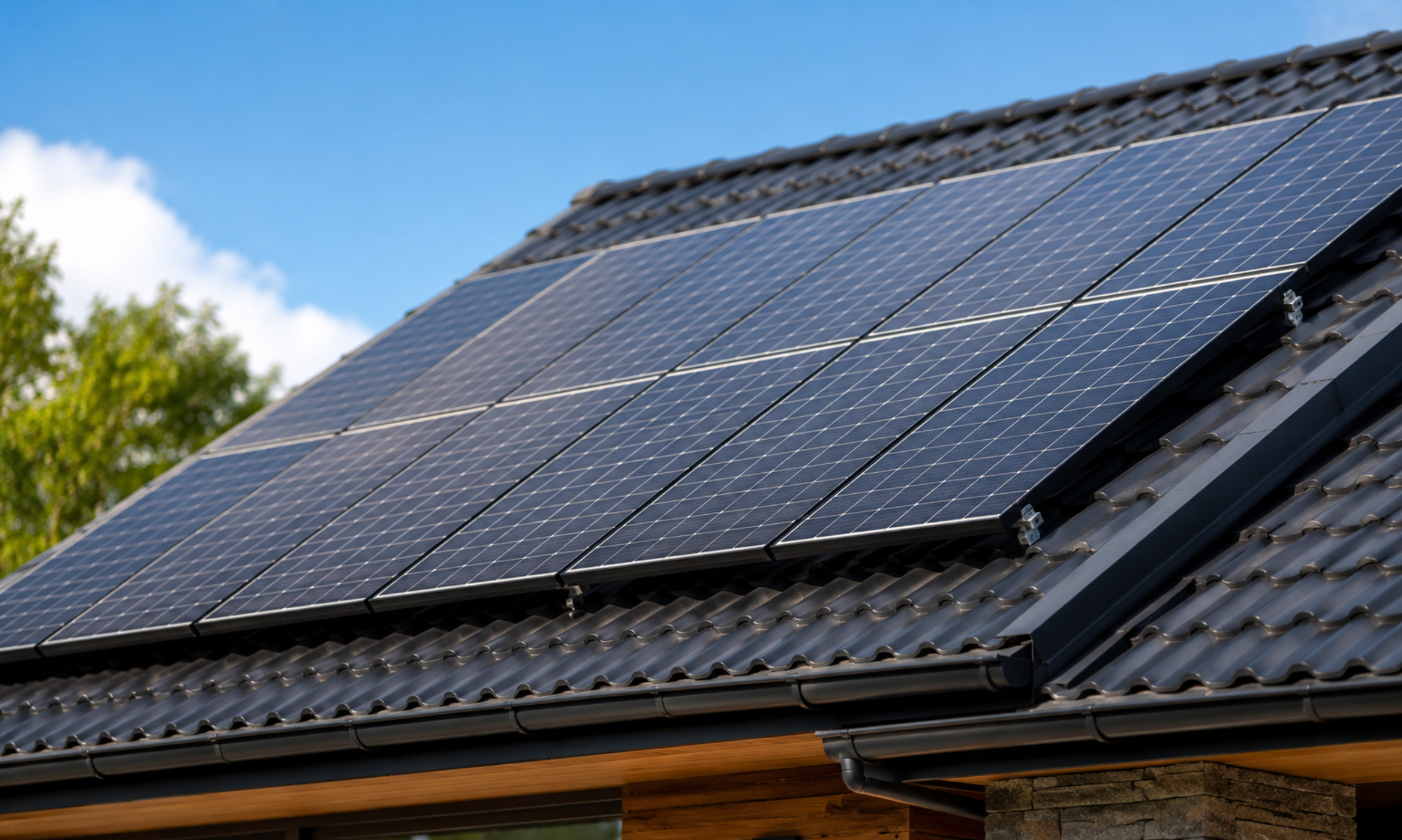
South Africa’s solar revolution is accelerating.
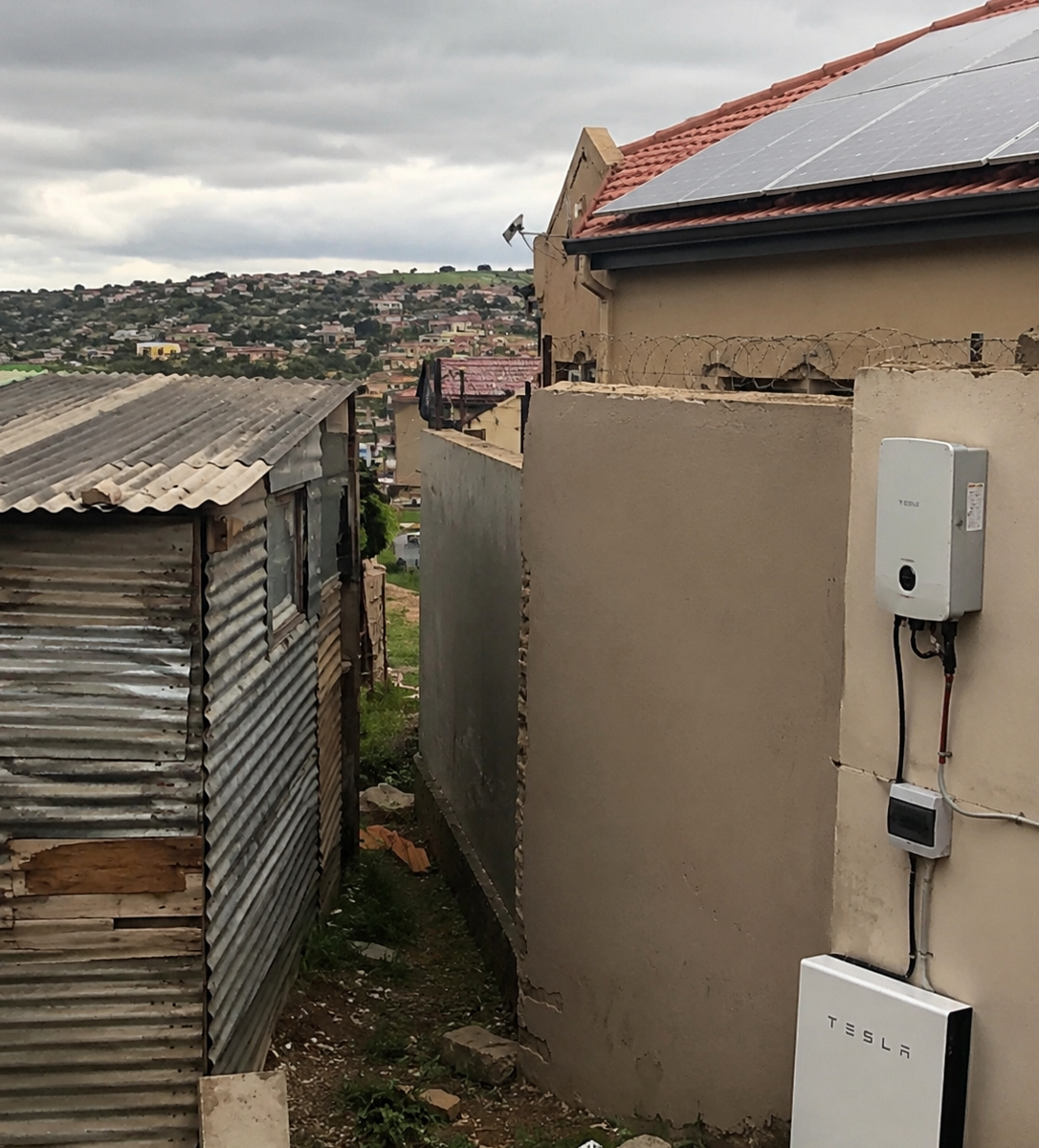
Drive through affluent suburbs and gated estates and you’ll see rooftops covered in solar panels, garages housing lithium batteries, and homes operating almost independently from Eskom. Yet only a few kilometres away, many township residents still endure darkness during loadshedding, rely on candles and paraffin, and struggle to afford even basic backup power.
This growing divide has led many commentators to describe a new phenomenon: Energy Apartheid.
The phrase is controversial, but it captures a reality that many South Africans can see with their own eyes. While solar technology is becoming increasingly common, access to reliable energy remains deeply unequal.
The debate is often framed as a conflict between two legitimate concerns:
- Security: Solar systems must be protected and financially sustainable.
- Equality: Reliable electricity should not become a privilege reserved for the wealthy.
Understanding both sides is essential if South Africa hopes to create a more inclusive energy future.
The Two Sides of the Solar Divide
Side A: Security and the Gated Estate Standard
For many residents of gated estates, solar power is no longer viewed as an environmental luxury.
It is viewed as a security necessity.
Modern South African households rely on electricity for:
- Alarm systems
- Electric fencing
- Security cameras
- Access control systems
- Internet connectivity
- Home offices
- Medical equipment
During extended Stage 4, Stage 5, or Stage 6 loadshedding, losing power is not merely inconvenient. It can create genuine safety risks.
This reality has driven thousands of homeowners to invest heavily in high-capacity backup and solar systems.
Gated estates offer several advantages that make solar adoption easier:
- Lower theft risk
- Secure installation environments
- Higher property values
- Better access to financing
- Estate infrastructure that supports solar installations
As a result, many estates have become showcases for energy-independent living.
Large systems capable of running an entire household have become increasingly popular.
Recommended for Maximum Independence
8KW MPPT Deye + 2x Dyness 5.12kWh Combo
For homeowners seeking complete energy resilience, high-capacity systems offer:
- Whole-home backup
- Significant reductions in grid dependence
- Expansion capability
- Long lithium battery lifespan
- Advanced MPPT solar charge controller benefits
- Compatibility with modern smart-home infrastructure
Rather than viewing private solar adoption as selfish, many homeowners argue that reducing demand on the national grid benefits everyone. Every household that partially disconnects from Eskom decreases pressure on an already strained system.
This perspective forms the foundation of the security argument.
The logic is straightforward:
“If I can protect my family while consuming less grid electricity, I am contributing to a more stable energy system.”
Yet critics argue that this solution only works for those who can afford it.
And that brings us to the other side of the debate.
Side B: Equality and the Right to Power in Townships
The equality argument starts from a different premise.
Electricity is not merely a convenience.
It is a prerequisite for economic opportunity.
Without reliable electricity, people face obstacles in:
- Education
- Remote work
- Small business development
- Food preservation
- Digital connectivity
- Personal safety
Many township residents experience the consequences of energy poverty more intensely than wealthier households.
While affluent homes may switch seamlessly to battery power during loadshedding, lower-income communities often face:
- Lost productivity
- Damaged appliances
- Increased household expenses
- Reduced study time for students
- Greater dependence on unsafe lighting alternatives
The challenge is not a lack of desire for solar power.
The challenge is access.
Several barriers continue to limit adoption:
- High upfront costs
- Limited financing options
- Informal housing structures
- Theft concerns
- Installation restrictions
- Limited awareness of entry-level solutions
This is where smaller and more affordable technologies become important.
Energy independence does not have to begin with a R200,000 solar installation.
Sometimes it begins with keeping the lights on, charging phones, and powering a television during loadshedding.
Recommended for Affordable Energy Independence
Ecco 3500VA Solar Ready Hybrid Inverter Trolley
For many households, portable trolley systems offer a practical first step.
Benefits include:
- Lower entry cost
- Portable design
- No major installation requirements
- Immediate loadshedding relief
- Ability to expand later
- Suitable for rental properties and apartments
The affordability objection often overlooks long-term economics.
Many households spend substantial amounts annually on:
- Candles
- Paraffin
- Generator fuel
- Appliance replacements
- Lost work opportunities
When viewed over several years, even modest solar and battery systems can produce meaningful returns while dramatically improving quality of life.
The equality perspective argues that energy justice in South Africa requires making these technologies accessible to everyone—not just homeowners in secure estates.
The Hidden Cost of Energy Apartheid
The danger of energy inequality extends beyond individual households.
It can create two separate economies.
One economy enjoys:
- Reliable internet
- Consistent productivity
- Remote work opportunities
- Business continuity
The other experiences:
- Frequent interruptions
- Reduced educational outcomes
- Lower productivity
- Increased economic vulnerability
This divide becomes self-reinforcing.
Reliable energy creates more opportunities to generate income.
Greater income enables more investment in reliable energy.
Without intervention, the gap can continue widening.
This is why discussions about energy justice South Africa increasingly focus on decentralized energy systems rather than traditional grid expansion alone.
The Solution: Decentralized Energy for All
Breaking Energy Apartheid does not require preventing wealthy households from installing solar.
Nor does it require waiting for Eskom to solve every problem.
The real solution is broader access.
South Africa’s future energy system will likely be decentralized.
Instead of relying entirely on large centralized power stations, energy generation can occur:
- On rooftops
- In communities
- Through micro-grids
- Via hybrid solar systems
- Through Energy-as-a-Service (EaaS) models
Several pilot projects have already explored community micro-grids in areas such as Soweto and Khayelitsha.
These initiatives suggest that reliable electricity does not always require every household to purchase a large individual system.
Shared infrastructure can lower costs while improving resilience.
Municipal feed-in tariffs may also play an important role.
When homeowners can sell excess solar power back into the grid, the economics of solar improve. Over time, wider participation could reduce costs and accelerate adoption across multiple income levels.
The goal should not be “Elite Solar.”
The goal should be Everywhere Solar.
Choosing Your Path to Energy Independence
The good news is that energy independence is no longer an all-or-nothing decision.
Today’s market offers solutions for almost every budget level.
Comparing Popular Solar Paths
| Solution Type | Best For | Approximate Budget | Key Advantage |
|---|---|---|---|
| Portable Trolley System | Apartments, renters, township households | Entry-Level | Fast and affordable loadshedding protection |
| Hybrid Inverter Combo | Average suburban households | Mid-Range | Balance of affordability and long-term savings |
| Full Solar Home System | Large homes and estates | Premium | Near-total energy independence |
Best Value Recommendation
6.2KVA Ecco MPPT Combo with 6 x 460W Solar Panels
For many South African households, this represents the middle ground.
Advantages include:
- Strong balance between cost and performance
- Solar-ready architecture
- Reduced electricity bills
- Backup capability during loadshedding
- Expandability for future needs
For families seeking meaningful energy security without committing to a premium estate-level installation, this category often delivers the best return on investment.
Looking Beyond the Divide
The Security vs. Equality debate often creates the impression that South Africans must choose one side.
In reality, both concerns are valid.
Security matters.
Equality matters.
Families have legitimate reasons to protect themselves from loadshedding.
Communities have legitimate reasons to demand broader access to reliable electricity.
The challenge is creating a future where these goals reinforce each other rather than compete.
Every new solar installation reduces strain on the grid.
Every reduction in solar costs improves accessibility.
Every innovation in financing expands opportunity.
And every step toward decentralized energy brings South Africa closer to a future where reliable power is not determined by postcode.
Energy Apartheid is not ultimately about solar panels.
It is about opportunity.
The real question is not whether South Africans should embrace solar power.
The real question is how quickly solar power can become accessible to everyone.
Whether you are looking for complete energy independence through a premium Deye and Dyness system, a balanced family solution such as a 6.2KVA hybrid combo, or an affordable Ecco trolley system to beat loadshedding today, the journey toward energy freedom begins with a single step.
The sooner that step is taken, the sooner South Africa moves from energy inequality toward energy independence for all.

Newsletter Signup
Subscribe to our monthly newsletter below and never miss the latest product or an exclusive offer or the latest developments in Off Grid Solar in SA.