For years, off-grid solar users have heard the same advice: “If you manage your lead-acid batteries properly, they’ll last for years.”
Technically, that’s true.
But there’s a massive difference between what works in theory and what actually happens in a real off-grid system powering a real home with unpredictable weather, fluctuating loads, and human habits.
That gap between theory and reality is exactly why so many off-grid users end up frustrated with lead-acid battery banks that fail far earlier than expected.
The core issue usually comes down to one thing: Depth of Discharge (DOD) management.
Lead-acid batteries are incredibly sensitive to how deeply they are discharged. In ideal conditions, careful DOD management can dramatically extend lifespan. But in practice, maintaining “ideal conditions” day after day is far harder than most people realize.
That’s one of the main reasons lithium batteries — especially modern lithium iron phosphate (LiFePO4) systems — are rapidly replacing lead-acid in off-grid solar setups worldwide.
The question is no longer whether lithium is technically superior. The real question is whether the higher upfront cost is worth escaping the constant maintenance, monitoring, and failure risks that come with lead-acid battery management.
For many off-grid users, the answer is becoming increasingly obvious.
The Promise vs. Reality: Understanding Lead-Acid Battery DOD
What is Depth of Discharge (DOD) and Why Does it Matter for Lead-Acid?
Depth of Discharge (DOD) refers to how much of a battery’s capacity has been used.
If you have a 100Ah battery and use 50Ah, the battery has reached 50% DOD.
This matters enormously with lead-acid batteries because the deeper you discharge them, the shorter their lifespan becomes.
A lead-acid battery repeatedly discharged to:
- 20% DOD may last several thousand cycles
- 50% DOD might achieve moderate lifespan
- 80–100% DOD can destroy lifespan surprisingly quickly
This is why experienced off-grid installers constantly emphasize the “50% rule.” In theory, you should avoid discharging lead-acid batteries below roughly half their usable capacity.
The problem is that off-grid life rarely follows theory.
A cloudy week arrives. Guests visit. Winter increases power consumption. An inverter runs longer than expected. Suddenly the battery bank is deeper into discharge territory than planned.
And every time that happens, lifespan takes another hit.
The “Skill” Side: How to Theoretically Maximize Lead-Acid Lifespan
To be fair to lead-acid advocates, they are not entirely wrong.
A carefully managed deep-cycle lead-acid battery bank can last a respectable amount of time if you:
- Keep DOD shallow
- Avoid prolonged undercharging
- Charge fully and regularly
- Equalize correctly
- Maintain proper temperatures
- Monitor voltage constantly
- Prevent sulfation
- Size the battery bank generously
- Avoid high surge loads
Under controlled conditions, good operators can absolutely extend battery life.
This is especially true for technically skilled users who enjoy system monitoring and meticulous energy management.
But notice how many conditions are attached to that success.
Lead-acid longevity depends heavily on discipline, technical understanding, and environmental stability. The margin for error is surprisingly small.
And that’s where the skepticism begins.
The Harsh Reality: Why Perfect DOD Management is Nearly Impossible Off-Grid
Unpredictable Loads and Solar Input: The Off-Grid Challenge
The harsh truth is that most people do not manage DOD perfectly.
In fact, many off-grid users unknowingly damage their lead-acid batteries long before obvious symptoms appear.
Why?
Because real-world off-grid systems are chaotic.
Solar production changes daily. Energy consumption fluctuates constantly. Human behavior is inconsistent.
Even well-designed systems encounter:
- Consecutive cloudy days
- Unexpected appliance usage
- Seasonal load increases
- Inverter inefficiencies
- Voltage drops
- Charging interruptions
- Load spikes
- Incorrect battery sizing
Imagine a household trying to maintain strict 50% DOD discipline during winter rain while running:
- Lights
- Refrigeration
- Internet equipment
- TVs
- Water pumps
- Phone charging
- Security systems
Eventually, convenience wins over battery preservation.
People naturally prioritize having power available when they need it. And every time the battery bank dips too deeply, long-term lifespan erodes a little further.
This is why the “just manage DOD better” argument often sounds good online but becomes exhausting in real off-grid living.
The reality is that maintaining perfect DOD management indefinitely requires constant vigilance — something very few households consistently achieve.
The Hidden Costs of Lead-Acid: Maintenance, Monitoring, and Early Failure
Lead-acid batteries rarely fail dramatically overnight.
Instead, they slowly lose performance.
Capacity declines. Runtime shrinks. Voltage becomes unstable. Charging efficiency drops.
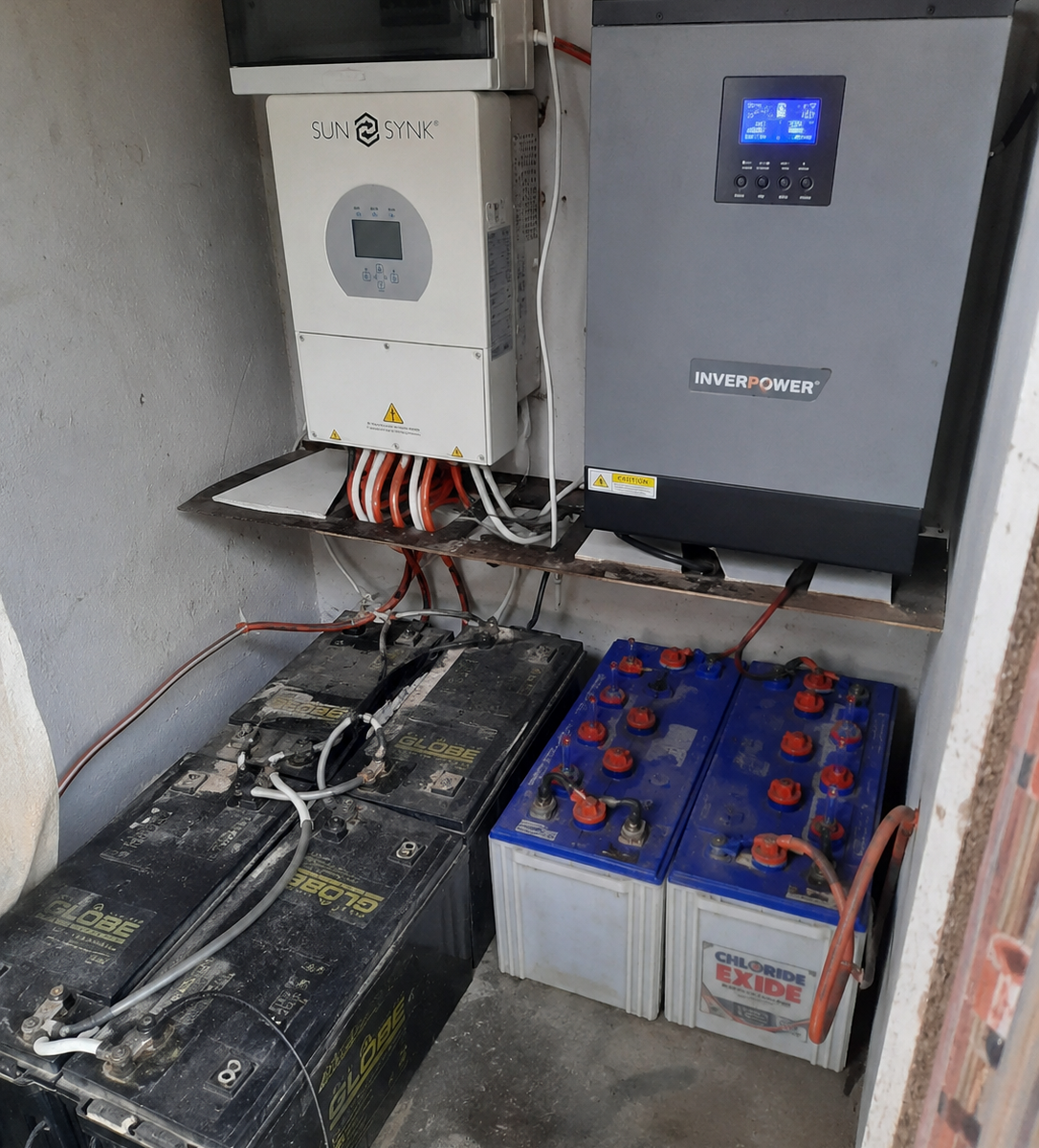
One of the biggest culprits is sulfation — the buildup of sulfate crystals caused by undercharging or extended partial discharge states.
Once sulfation progresses significantly, recovery becomes difficult or impossible.
And this is where many off-grid users discover the hidden cost of “cheap” batteries.
Lead-acid systems demand ongoing attention:
- Water top-ups
- Voltage checks
- Equalization charging
- Corrosion cleaning
- Temperature management
- Specific gravity testing
- Constant monitoring
In other words, you are not just maintaining a battery bank.
You are managing a fragile system that punishes mistakes.
Then comes the financial sting: premature replacement.
Many users expecting 5–8 years from a battery bank discover serious degradation far sooner because real-world DOD management was never as controlled as they assumed.
At that point, the cheaper upfront price of lead-acid begins to look far less attractive.
The Game Changer: How Lithium Batteries Solve the DOD Dilemma
DOD Freedom: Why Lithium Batteries Don’t Care About Deep Discharges
This is where lithium batteries fundamentally change the experience of off-grid solar.
Unlike lead-acid, lithium iron phosphate (LiFePO4) batteries are designed to tolerate deep discharges routinely.
Using 80% or even 90% DOD is normal for many lithium systems.
That changes everything.
Instead of constantly worrying about preserving battery health through strict usage discipline, users gain far more practical usable capacity from the same nominal battery size.
A lithium battery system can often provide:
- Far higher usable energy
- Much longer cycle life
- Greater voltage stability
- Better efficiency
- Faster charging
Most importantly, lithium batteries are dramatically more forgiving.
That means cloudy days, unexpected loads, or temporary heavy usage no longer become catastrophic battery-aging events.
This is why modern off-grid systems increasingly revolve around lithium combo kits that integrate:
- Lithium battery storage
- Hybrid inverter systems
- MPPT charge controllers
- Smart battery management systems (BMS)
Instead of constantly managing battery survival, users can focus on actually using their power systems.
Beyond DOD: Other Lithium Advantages for Off-Grid Solar
The DOD advantage is only part of the story.
Lithium systems also offer several practical improvements over lead-acid:
Higher Energy Density
Lithium batteries store more energy in less space.
Lower Weight
This matters enormously for installations with limited space or transport constraints.
Faster Charging
Lithium batteries absorb solar charging far more efficiently, especially during limited sunlight windows.
Minimal Maintenance
No watering. No equalization. No acid corrosion cleanup.
Integrated Protection
Most modern lithium systems include sophisticated BMS protection against:
- Overcharging
- Over-discharging
- Overcurrent
- Short circuits
- Temperature extremes
For many off-grid users, this shift feels less like upgrading a battery and more like upgrading an entire lifestyle.
Lead-Acid vs. Lithium: A Practical Comparison for Off-Grid Power
Lifespan & Performance: The True Cost Over Time
At first glance, lead-acid appears cheaper.
But total cost of ownership tells a different story.
A lead-acid battery bank may require replacement multiple times over the lifespan of a quality lithium system.
Meanwhile lithium batteries often deliver:
- Thousands more cycles
- Higher usable capacity
- Better efficiency
- Lower maintenance costs
- Reduced downtime
When you calculate replacement frequency, maintenance effort, lost efficiency, and degraded performance, lithium frequently becomes the cheaper long-term solution despite higher upfront cost.
This is especially true for people who rely heavily on their off-grid systems daily rather than occasionally.
A battery system is not just a purchase price.
It is a reliability investment.
Maintenance & Monitoring: Reclaiming Your Time and Peace of Mind
One of the least discussed advantages of lithium is psychological.
Lead-acid systems encourage constant anxiety:
- “Did the batteries discharge too deeply?”
- “Did they fully recharge today?”
- “Are they sulfating?”
- “Did someone leave a load running?”
Lithium dramatically reduces this stress.
Integrated BMS systems automate much of the protection logic that lead-acid users previously had to manage manually.
That means fewer maintenance routines, fewer technical checks, and far less day-to-day battery babysitting.
For many households, that convenience alone justifies the upgrade.
Making the Switch: Choosing the Right Lithium Combo for Your Off-Grid System
Key Factors When Upgrading to Lithium
Not all lithium systems are equal.
When evaluating a lithium battery upgrade, pay attention to:
- Battery chemistry (LiFePO4 is preferred)
- Usable capacity
- Inverter compatibility
- MPPT charge controller quality
- BMS sophistication
- Surge handling capability
- Warranty support
- Brand reputation
A well-matched combo kit simplifies installation and ensures all components work together efficiently.
For smaller backup or loadshedding applications, a compact lithium combo may be sufficient.
For larger off-grid homes, workshops, or energy-intensive systems, higher-capacity inverter-battery combinations become essential.
Our Top Picks: High-Performance Lithium Solutions for Off-Grid Solar
Here are several strong lithium combo kit options worth evaluating for off-grid reliability and reduced maintenance headaches:
Ecco Pure Sine Wave Lithium Battery Loadshedding Budget Combo
Ideal for:
- Budget-conscious users
- Small backup systems
- Essential appliance support
Why it stands out:
- Lower maintenance than lead-acid
- Better usable capacity
- Simple entry into lithium storage
Ecco 3.5 KVA 3500 WATT MPPT 100A Svolt 106 AH 2.71 Lithium Combo Kit
Ideal for:
- Medium off-grid households
- Frequent loadshedding
- Daily cycling applications
Why it stands out:
- Strong balance of capacity and affordability
- Efficient MPPT charging
- Reliable lithium performance under deeper discharge conditions
LiFePO4 Hybrid Inverter Battery Combo Kits
Ideal for:
- Full off-grid systems
- Users upgrading from aging lead-acid banks
- Long-term energy independence
Why they stand out:
- Excellent cycle life
- Minimal maintenance
- Superior long-term reliability
High-Capacity Lithium Solar Battery Systems
Ideal for:
- Workshops
- Farms
- Larger homes
- High-consumption users
Why they stand out:
- Better scalability
- High surge handling
- Improved long-term cost efficiency
Conclusion: Embrace Reliability, Ditch the DOD Drama
Lead-acid batteries are not useless.
Under ideal conditions and disciplined management, they can still perform reasonably well.
But the modern off-grid reality is that perfect DOD management is far harder than many people expect.
Real households are unpredictable. Weather changes. Loads fluctuate. Life happens.
And lead-acid batteries punish those imperfections relentlessly.
Lithium batteries change the equation by offering:
- Deep discharge tolerance
- Longer lifespan
- Lower maintenance
- Better efficiency
- Greater reliability
- Reduced stress
That is why lithium is rapidly becoming the standard for serious off-grid solar systems.
Instead of constantly fighting to preserve fragile battery health, users can finally focus on what off-grid solar was supposed to provide in the first place:
Reliable, practical energy independence.
If you are tired of monitoring voltage obsessively, worrying about sulfation, or replacing worn-out lead-acid banks prematurely, it may be time to explore a modern lithium upgrade and invest in a system designed for real-world off-grid living.

Newsletter Signup
Subscribe to our monthly newsletter below and never miss the latest product or an exclusive offer or the latest developments in Off Grid Solar in SA.